Industrial digital transformation
Your factory runs today.Can it grow tomorrow?
Markets don’t wait. Competitors don’t rest. The companies that thrive over the next decade won’t be the biggest, but the most connected, the most agile and the ones that make decisions with real data in real time.
73%
of industrial plants still operate with data disconnected between departments
3.5×
faster response to the market in digitalized plants
40%
average reduction in unplanned downtime with a digital twin
01 · The landscape
Industry demands more, faster, with fewer resources
Supply chains have become unpredictable. Product lifecycles are getting shorter. Customers demand mass customization. Margins are shrinking. In that environment, deciding with incomplete information is no longer a viable option.
Decision-makers and project engineers face pressure on every front: cutting costs without hurting quality, moving faster without making mistakes and scaling without losing control. The answer isn’t working harder, but working with data intelligence.
Factory digitalization isn’t a technology trend. It is the competitive infrastructure of the next industrial cycle.
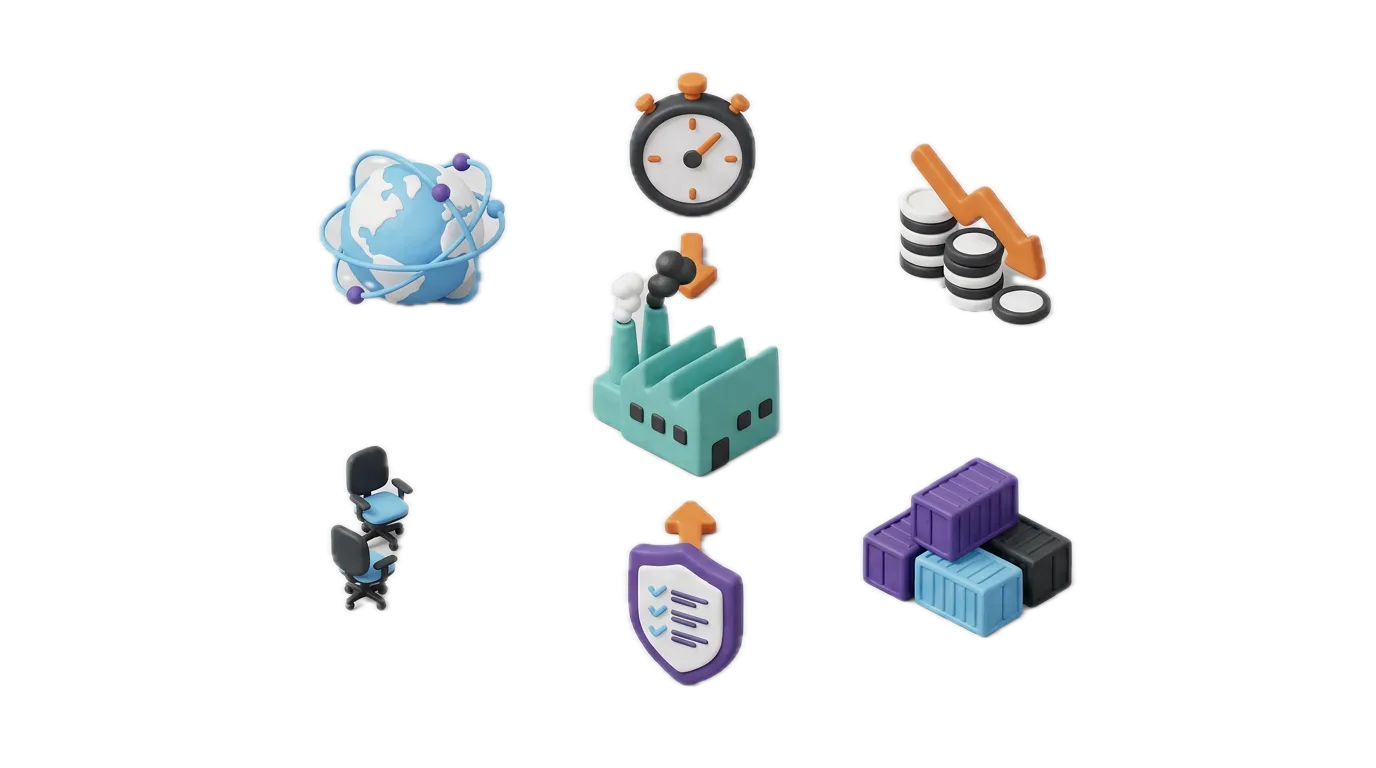
Speed to market
Development cycles are compressing. Whoever is slow to respond loses the order before even quoting it.
Operational complexity
More product variants, more lines and more suppliers. Manual management no longer scales.
Margins under pressure
Energy, labor and material costs keep rising. Hidden waste destroys profitability.
Global competition
Your competitor isn’t in your city. They operate across continents and have full, real-time visibility into their plant.
Growing regulation
Traceability, carbon footprint and certifications. Manual documentation is a compliance risk.
Scarce talent
Critical operational knowledge lives in the heads of a few people. What happens when they leave?
02 · Real obstacles
Inefficiency has a face, a name and a cost
These aren’t hypotheses. They are scenarios that happen every day in plants running on last century’s processes, tools and information flows.
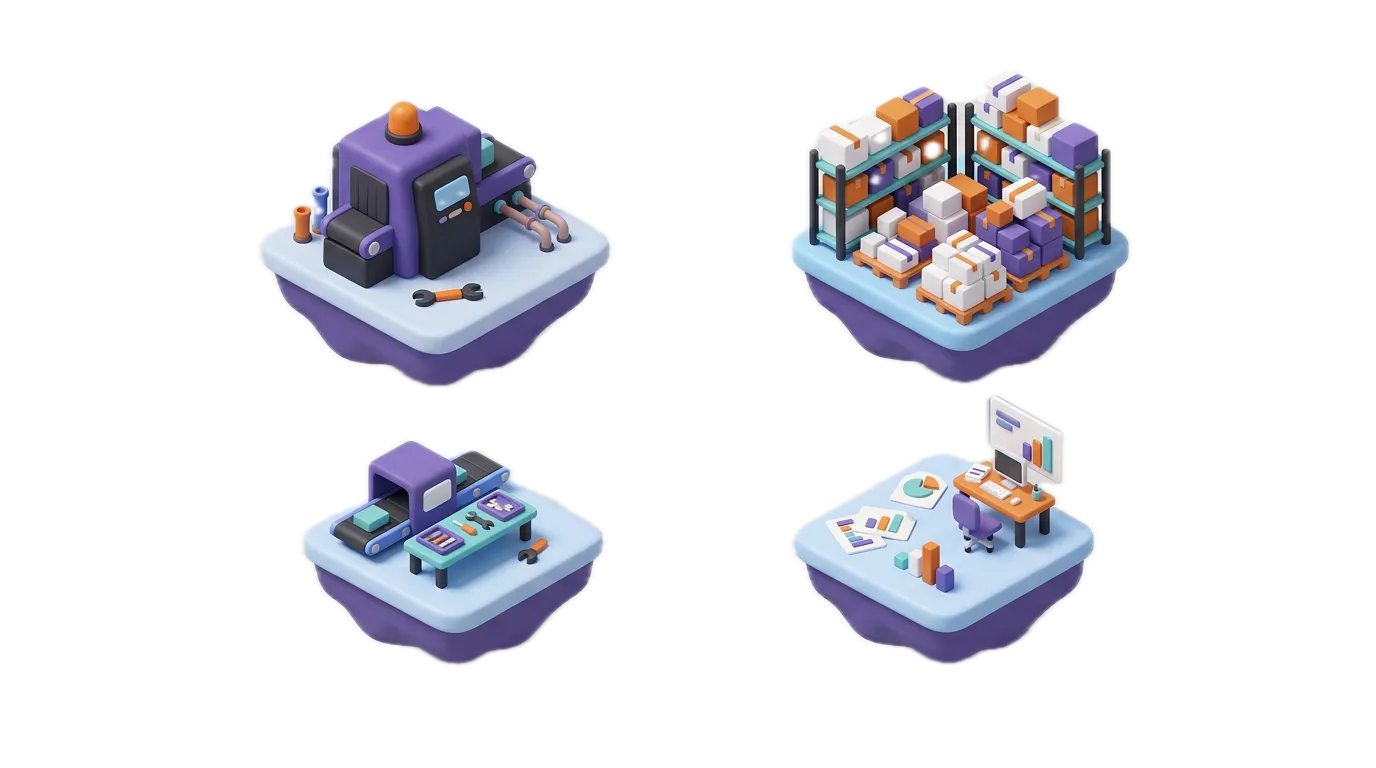
Data silos
Production in one Excel file. Maintenance in another. Logistics in an ERP that doesn’t talk to the shop floor. Engineers spend 40% of their time consolidating information before they can analyze it.
Time lost every day
Reactive maintenance
The machine fails when no one expects it. The line stops and an urgent negotiation with the supplier begins. A failure costs 6 times more than prevention. Without digitalization, prevention is impossible.
Unplanned downtime
Flying blind
The plant manager receives the previous shift’s report after already making decisions based on assumptions. Bottlenecks are identified once the damage is done.
Late decisions
Undocumented layouts
A production line change takes weeks of physical surveys, paper drawings and endless meetings to agree on a reality no one has kept up to date.
Weeks for every change
Overproduction and inventory
Without visibility into the actual flow, planners over-order just in case. Inventory grows, working capital gets tied up and floor space runs short.
Tied-up capital
Failed expansion projects
An investment decision is made on estimated data. The new line doesn’t fit the actual flow, it gets redesigned and the project slips 8 months. Simulation would have exposed the mistake in hours.
Investment at risk
03 · The investment case
Digitalization isn’t an expense. It’s a multiplier for your operation.
Every dollar invested in digitalization is recovered and multiplied when the organization makes better decisions, faster and with greater confidence. These are the return drivers for industrial transformation.
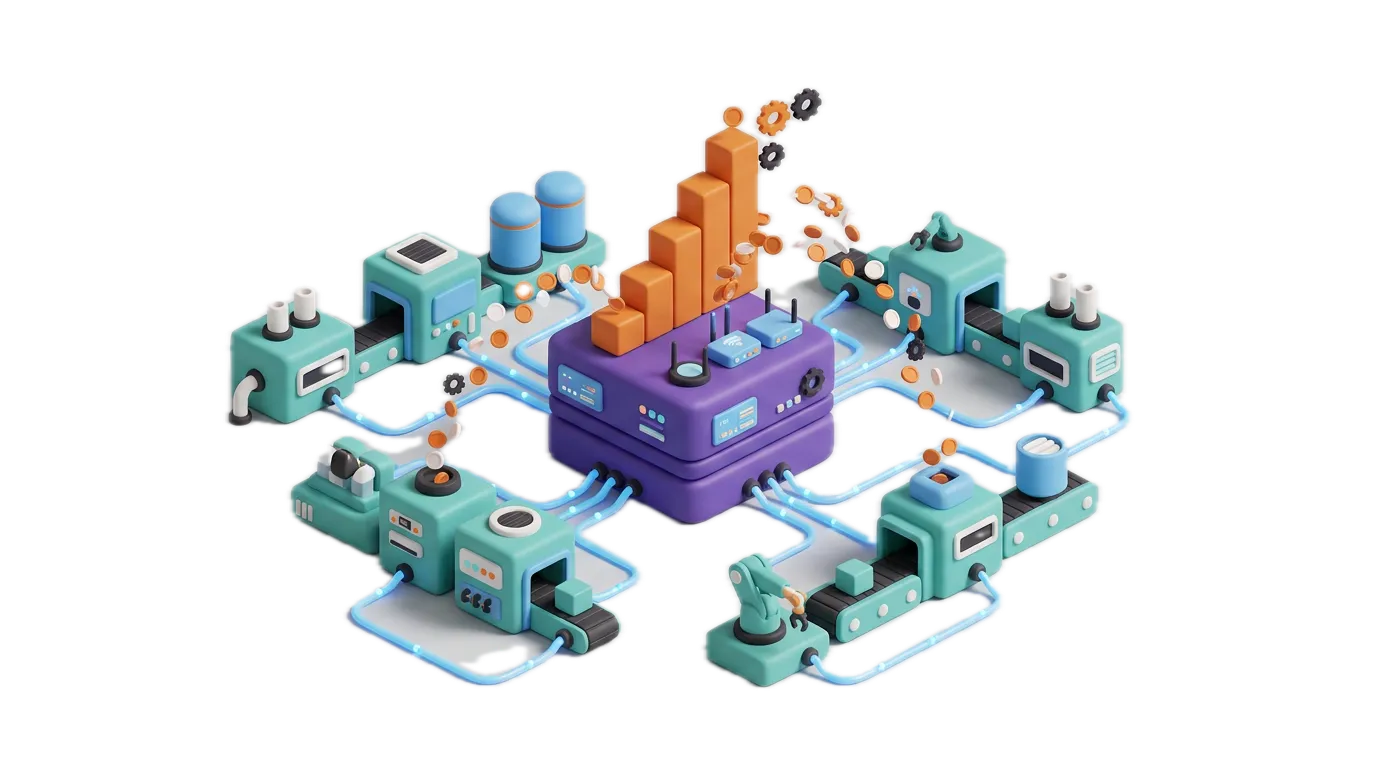
Immediate ROI
Time and material savings
A digital model of your plant lets you validate layout changes, flows and line balancing before moving a single machine. Costly configuration errors disappear, and redesigns are tested virtually at a fraction of the real cost.
Competitive advantage
Staying ahead of the market
With simulation and integrated data, you can model demand scenarios before they happen: how much capacity you need if orders grow 30%, or how a component shortage affects your delivery commitments.
Response time
Faster development cycles
Virtual prototyping shortens time-to-market in manufacturing. Validating production of a new product in a digital twin compresses months of physical trials into days of simulation.
Operational efficiency
Machine and process optimization
Continuous asset monitoring reveals patterns the human eye would miss: actual OEE, tighter cycle times and precisely identified bottlenecks. The plant produces more with the same resources.
Decision-making
Centralized data and full visibility
A single source of truth for the entire operation. Production, maintenance, quality, logistics and finance speak the same language. The plant director and the CEO see the same picture in real time.
Strategic asset
Preserving and scaling knowledge
The know-how of your most experienced engineers is captured in models, parameters and digital workflows. That knowledge scales, is replicated and stays in the organization regardless of team turnover.
04 · The cost of standing still
Obsolescence doesn’t announce itself
It isn’t an event. It’s a gradual, silent process. Every quarter without progress is ground ceded to those who did decide to move.
Risk 01
Loss of competitiveness on price and lead time
When your competitor can simulate, plan and adjust production in hours and you need weeks, the gap in quotes and delivery commitments becomes impossible to close. The most profitable contracts go to whoever can respond first with the most certainty.
Risk 02
Rising hidden operating costs
Waste that isn’t measured isn’t eliminated. Rework, scrap, downtime and excess inventory become accepted as part of the cost of operating until the margin collapses.
Risk 03
Risk in investment decisions
Expanding a plant, adding a line or changing a process without a reliable digital model is like betting capital on incomplete information. Projects that aren’t validated virtually show larger cost and schedule deviations.
Risk 04
Inability to attract top talent
The next generation of engineers and managers looks for workplaces with advanced tools. A plant that runs on spreadsheets and paper drawings loses its appeal to the talent that could transform the organization.
Risk 05
Dependence on individual knowledge
Without digitalization, operational intelligence lives in people, not systems. When that person resigns, retires or falls ill, the organization loses years of learning that no onboarding process easily recovers.
Risk 06
Exclusion from global value chains
Multinational corporations and large integrators are setting digital interoperability requirements. Without a minimum level of digital maturity, a company can be left out of key bids in the next industrial cycle.
05 · The gradual path
It’s not a revolution. It’s a smart evolution.
Adopting a digital twin doesn’t mean replacing everything overnight. It means building, layer by layer, a digital representation of the operation that grows with the organization’s maturity. Each stage delivers value on its own.
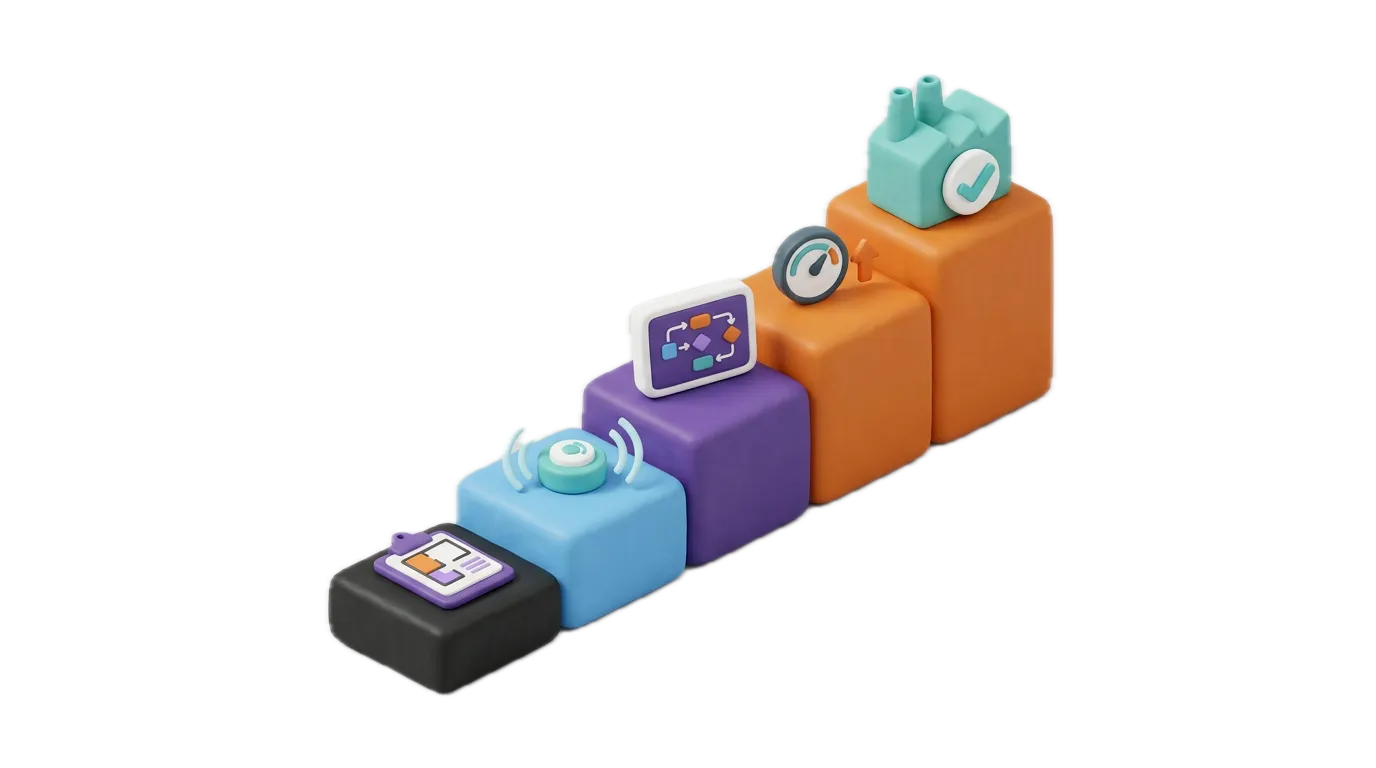
- 01
Document
Capture the current state: 3D factory layout, material flows and asset catalog. Establish the digital baseline.
- 02
Connect
Integrate data sources: sensors, ERP, MES and quality. The digital model starts receiving real data from the plant.
- 03
Simulate
Model scenarios: flows, bottlenecks and layout alternatives. Validate decisions before executing them physically.
- 04
Optimize
The digital twin learns from real behavior. Recommendations become proactive and the plant adjusts toward greater efficiency.
The mindset shift that enables everything
- From managing problems to preventing them with data
- From planning with estimates to planning with validated models
- From deciding by intuition to deciding by evidence
- From documenting for compliance to documenting for growth
- From seeing technology as a cost to seeing it as a multiplier
What you don’t need to get started
- You don’t need to replace your ERP or current infrastructure
- You don’t need a massive transformation budget in year one
- You don’t need a specialized IT department from day one
- You don’t need to wait until the whole organization is ready
- You don’t need the perfect model: you need the first real model
The smart decision
Start the digital journey today.
- Full, real-time visibility into your plant
- Investment decisions backed by simulation
- Less waste and downtime
- Faster time-to-market
- Operational knowledge preserved and scalable
- A plant that stays competitive for the next 10 years
- Gradual implementation, ROI stage by stage
The cost of waiting
Business as usual.
- Decisions based on incomplete or late data
- Investments at risk without digital validation
- Hidden costs eroding the margin every month
- Lost contracts to more agile competitors
- Critical talent taking its knowledge out the door
- Gradual exclusion from global value chains
- The digital gap widens with every quarter of waiting
Falling behind ✕